

CLS Core Faculty Elena Ruíz recognized for her work with survivors of domestic violence
August 10, 2026
For nearly four years, a Michigan State University researcher and two Detroit organizations have worked side by side to expand services for survivors of domestic violence, sexual assault, and human trafficking in Detroit, securing nearly $900,000 in funding, establishing the first paid staff positions at both organizations, launching new programs, and strengthening community-led support networks across the city.

That work earned Elena Ruíz, Professor in MSU’s Department of Philosophy and founder and Director of the Research Institute for Structural Change (RISC) at Michigan State University, two 2026 MSU Outreach and Engagement Awards.
Ruíz received the Community Engagement Scholarship Award and the Distinguished Partnership Award for Community-Engaged Research presented at the MSU Outreach and Engagement Awards Ceremony on March 12, 2026, at the Kellogg Hotel and Conference Center. Both awards recognize her work through RISC alongside two Detroit-based survivor service organizations: Women Healing Eternally and Transforming (WHEAT) led by Melvenna Fant-Jones, founder and Executive Director of WHEAT, and Sara’s House/Place led by Geneva Jackson, founder and CEO of Sara’s House/Place.
The project, titled Building Capacity for Community-Led Survivor Services and Wraparound Care in Detroit Through Research-Practice Partnerships, uses collaborative, reciprocal methods to address gender-based violence in Detroit. The partnership expands access to public health research for nonprofit service providers while strengthening the capacity of all three organizations to deliver culturally responsive care to survivors.
A Community-Initiated Partnership
The partnership began with a direct request from Sara’s House/Place and WHEAT rather than with a university-designed research agenda.
“It was a community-initiated relationship that originated with a specific need identified by the communities we serve,” Ruíz said. “Our partners reasonably assumed that a public university would be of public service to the communities they are in. They came to RISC with expressed needs.”
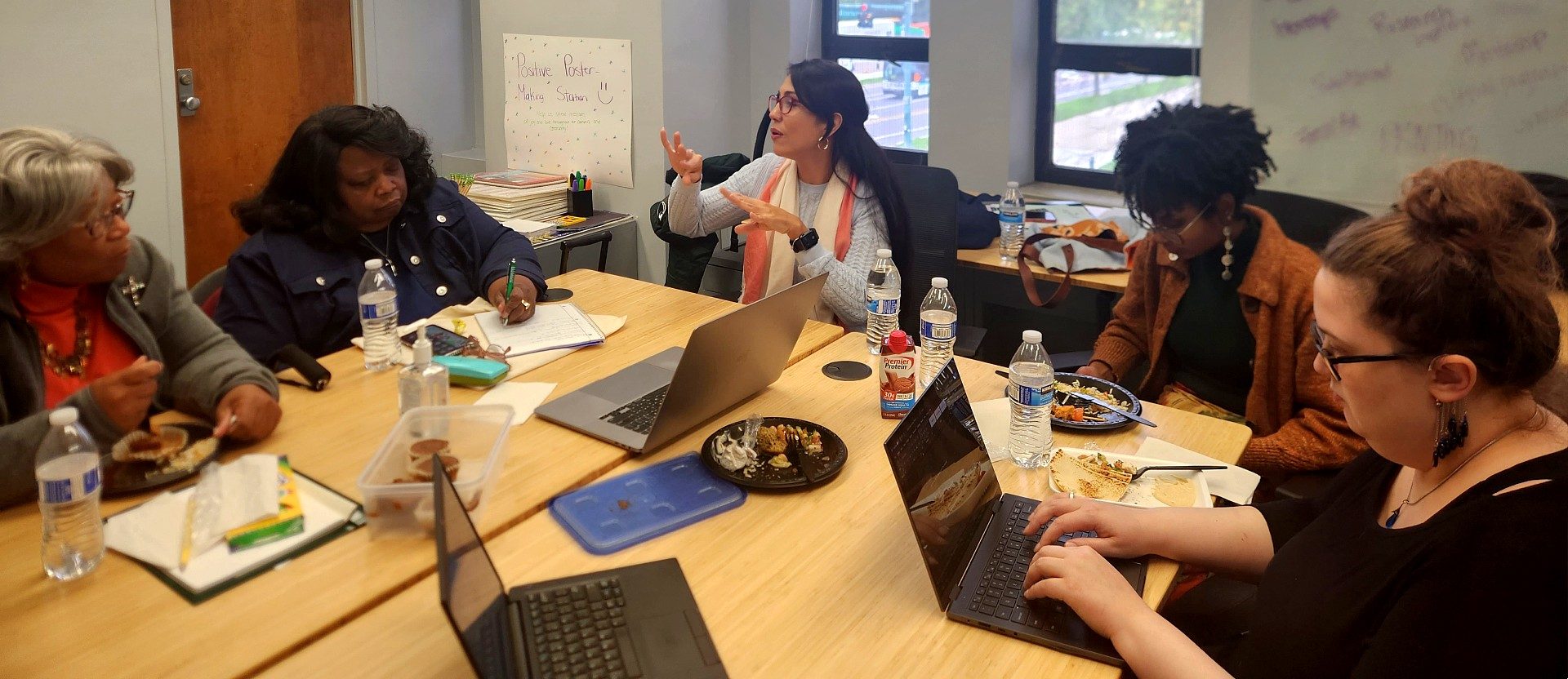
RISC is a nonprofit organization that strengthens community resilience by supporting place-based, community-led solutions to today’s pressing structural problems affecting human health and well-being, from housing insecurity to gender-based violence.
Ruíz’s research focuses on policy and community-based solutions to gender-based violence, including sexual assault, interpersonal violence, stalking, cyberstalking, and human trafficking. Her work has had a broad-ranging impact across fields by illuminating how structural inequalities and the legacies of colonialism shape population health, particularly for women of color survivors of sexual violence. Through RISC, she trains the next generation of structurally responsive community health advocates and policy leaders committed to creating structural change.
Ruíz and RISC were already familiar with Sara’s House/Place and WHEAT through their mutual aid and grassroots accelerator programs in Detroit, which support the development of culturally responsive community health infrastructures. The relationship began nearly four years ago.

That kind of community initiation is central to how RISC operates.
“We know community-initiated partnerships are associated with more relevant research questions, greater utilization of findings, more sustainable outcomes, and higher levels of trust, so community initiation is not incidental to our process, it’s constitutive of our model’s integrity,” Ruíz said. “It signals to communities that they hold epistemic authority over the problems affecting them, and it centers their choice.”
Mission and Model
According to Ruíz, the partnership reflects RISC’s mission and values. The institute’s mission is to support community-led solutions to structural problems in human health and well-being, ranging from housing insecurity to gender-based violence.
“The institute is built on the idea that structural change requires building long-term infrastructures that support a different way of doing things and relating to one another, including changing how institutions are built to relate to the communities they are in,” Ruíz said.
“We built a cross-subsidy research model that allows us to partner with some of the nation’s most trusted organizations to provide these services at no cost to small grassroots and community organizations like WHEAT and Sara’s House.”
To make its services accessible, RISC developed what Ruíz describes as a cross-subsidy research model.
“Our services, for example, are culturally specific and 100% free to local community and grassroots organizations,” she said. “We built a cross-subsidy research model that allows us to partner with some of the nation’s most trusted organizations to provide these services at no cost to small grassroots and community organizations like WHEAT and Sara’s House/Place, which are critical to health infrastructures in frontline communities.”
What the Collaboration Involves
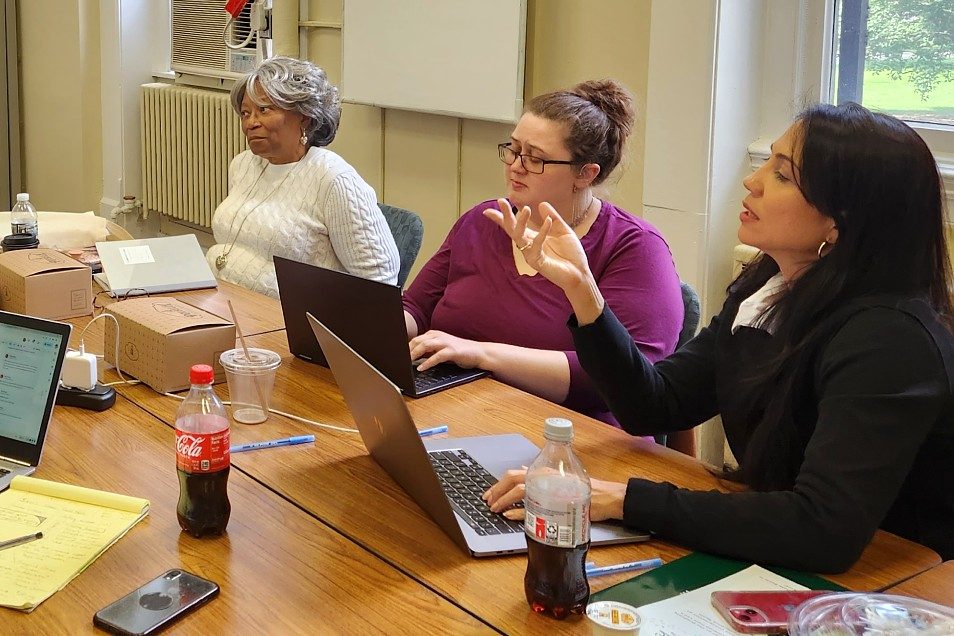
The work with Sara’s House/Place and WHEAT is both extensive and practical. On an administrative level, it is coordinated through weekly standing meetings, project and grant discussions, site visits, workshops, co-designed classes, and participation in community events.
RISC provides public health research services, grant writing and fundraising support, legal research, technical writing and fact-checking, program evaluation and design, post-award monitoring and evaluation, policy analysis, coalition-building strategies, technical infrastructure and data management solutions, workshop facilitation, coordination with MSU programs, and student training opportunities and internship program support.
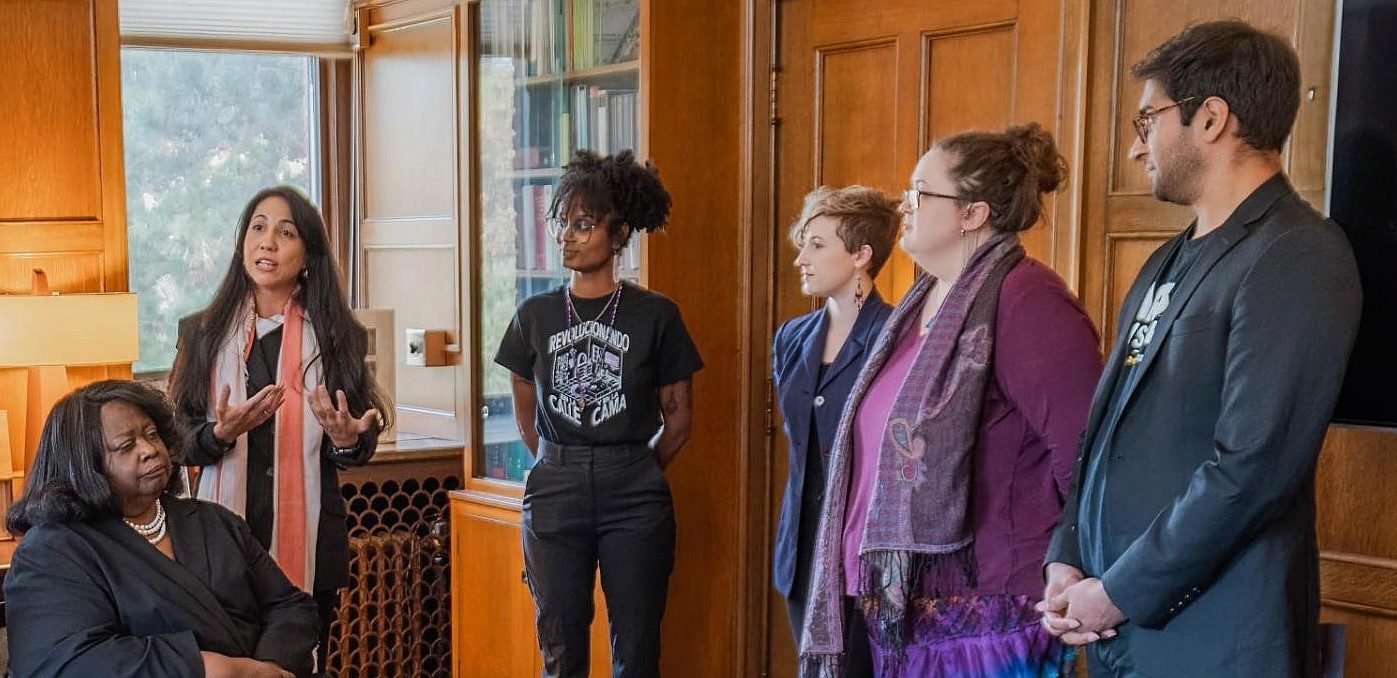
WHEAT and Sara’s House/Place contribute community leadership and expertise, direct survivor services, needs assessments, and training opportunities for RISC students and staff.
The collaboration has also produced initiatives such as WHEAT’s youth summer camp, Sara’s House’s transitional housing programs, and the Survivors’ Choir of Detroit, a community-designed art therapy and resource distribution model grounded in healing justice principles that has since become an independent 501(c)(3) organization.
Nearly $900,000 Raised for Survivor Services
The partnership has raised nearly $900,000 to support survivor-serving programs.
“The funding has been genuinely transformative in ways that were structurally inaccessible to these organizations before the partnership,” Ruíz said.
“The funding has been genuinely transformative in ways that were structurally inaccessible to these organizations before the partnership.”
Both WHEAT and Sara’s House/Place secured their first federal grants, totaling more than $600,000, and established the first paid staff positions in their histories, a critical step toward long-term sustainability.
WHEAT’s 2025 summer camp served 113 youth in foster care through violence prevention programming, while Sara’s House/Place launched a transitional housing program providing up to two years of comprehensive support for pregnant and parenting survivors of gender-based violence.
Funding has also provided newborn care essentials for more than 75 low-income families, including code-compliant infant car seats; expanded violence prevention initiatives and culturally responsive workshops; and supported direct cash assistance programs for survivors. WHEAT also became an official county service provider, a designation that would not have been possible without the infrastructure developed through the partnership.
The organizations are now pursuing additional large-scale funding to support a community-led housing initiative aimed at creating Detroit’s first long-term family housing and comprehensive service campus for survivors.
Co-Constructed Scholarship
The partnership has generated scholarship on community-led research methods as well as community-centered curricula focused on violence prevention and trauma-informed care.
“Our scholarship looks like whatever our partners decide is useful and relevant to their needs,” Ruíz said. “All our research agendas are co-constructed with community partners, and all knowledge is co-owned by community partners. We’ve produced everything from public awareness campaigns to doctoral dissertations.”
“All our research agendas are co-constructed with community partners, and all knowledge is co-owned by community partners. We’ve produced everything from public awareness campaigns to doctoral dissertations.”
Outputs include a published model of survivor-centered care; trauma-informed and culturally responsive care curricula developed alongside WHEAT and Sara’s House/Place; technical manuals supporting trauma-informed service delivery; and workshops and training programs that WHEAT now provides to other community organizations, including the Macomb County Continuum of Care.
Moving at the Speed of Trust
The partnership has reinforced for Ruíz the importance of consistency, tuning out academic noise, and a sustained commitment to community relationships.
“One of the things we’re always emphasizing is how important it is to move at the speed of trust and recognize how hard it is to do things differently in systems set up to support colonial relationships of power and privilege,” she said. Quoting Melvenna Fant Jones, Ruíz added that “showing up for communities consistently, even when resources are limited,” is critical to building trust.
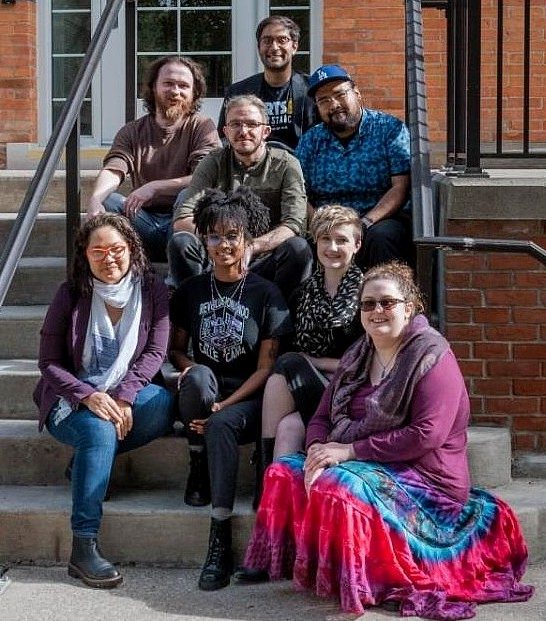
“We’re very intentional in this partnership about moving with calmness, kindness, transparency, accountability, but most importantly, consistency,” she said.
Ruíz also emphasized that relationship building is itself a methodological choice that academic culture does not always reward.
“Trust takes time, and time is a methodological choice,” she said. “In a publish-or-perish academic culture, choosing to invest years in building relationships without extracting publications is an ethical statement that untenured faculty or job-market-readying students are often not in a structural position to be able to make.”
The partnership has also shaped how Ruíz understands the role of public universities.
“The partnership has reinforced how much mutual aid runs the world,” she said. “Inequality is so pervasive and deeply embedded in the design of so many systems that mutual aid networks and community-led infrastructures are lifelines for people in frontline communities. We have a clear normative vision: Public universities should function as public service infrastructures and resource hubs that support the communities around them.
Recognition and Resources
For Ruíz, the two awards represent more than recognition.
“It means resources,” she said. “Support is a verb, and recognition without resources is inaction at best. The financial support that accompanied these awards meant the most because those resources were returned to the community, where they are needed and where they belong.”
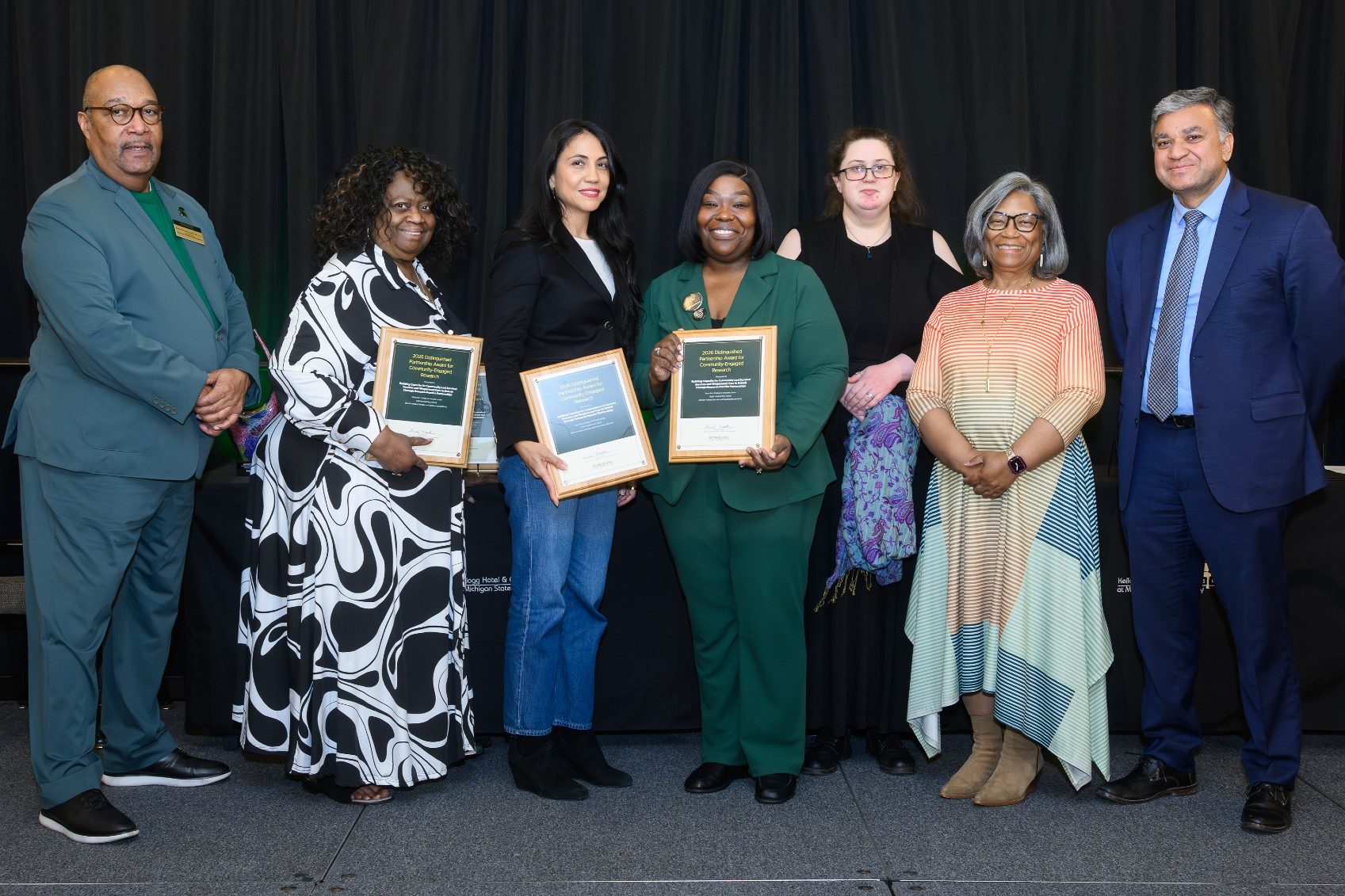
Ruíz hopes the partnership demonstrates the power of community expertise and collective action.
“Many communities already have the answers to the problems that structure inequality and understand the importance of putting unrelenting pressure on the systems that create those inequalities while building better alternatives,” she said.
She also noted that demand for the Institute’s work exceeds its current capacity and encouraged those who are able to support WHEAT and Sara’s House/Place directly through their websites.
By Austin Curtis and Kim Popiolek