

CLS Director named Access Champion for Hispanic Heritage Month
September 21, 2026 - Emily Jodway Patyna
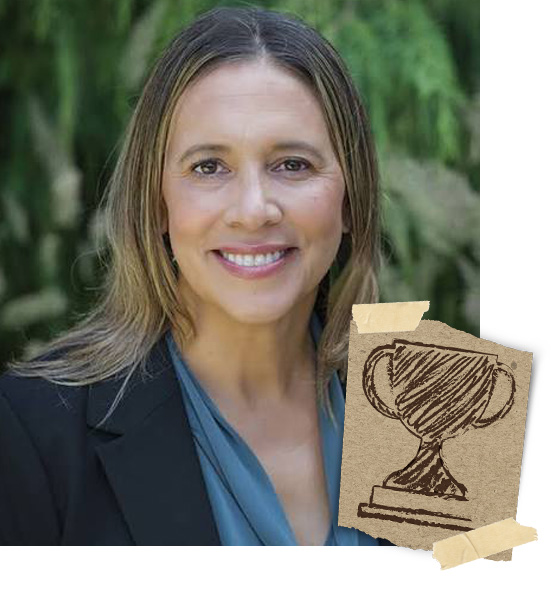
Our Access Champion for the month of September as we celebrate Hispanic Heritage Month is Linda Halgunseth, an Associate Professor at Michigan State in the Department of Human Development and Family Studies (HDFS) and Director of the Chicano/Latino Studies program.
Halgunseth primarily researches diversity, youth and family development, culturally responsive parenting, and parent-child relationships among Latinx and immigrant families. She was first introduced to ideas of parenting across cultures and how culture influences parenting values when she was in graduate school. The primary focus at the time was on how this concept presents in African American and Black parenting. But as a child of a Mexican-American mother and European father, “I naturally started having questions about what this looks like in Latino families,” she said.
Halgunseth remembers from her own childhood the ways in which she was raised differently from her friends. She felt especially represented in research being done by Black family scholars on no-nonsense parenting. “My associations with that type of [no-nonsense] parenting were very different from the associations my friends were making with it,” she explained. “They thought it was an infringement on my independence. But I never connected it with my mother not caring about me or my needs; if anything, it was the opposite.”
She pivoted her focus to this area with hopes of expanding the current literature available on culturally-grounded parenting and Latinx families. Much of the previous research used measures that were developed observing white families and examined parenting scenarios that were not applicable to Latinx families. “Getting valid findings out there can help us better understand Latinx parenting,” Halgunseth said. “We can have a deeper understanding of parenting that happens within Latinx families, and create parenting programs accordingly. When you use measures that are culturally sensitive and items that are grounded in the language that they use everyday with their children, the programs will be more effective and make sense to the population that you’re targeting.”
Halgunseth arrived at Michigan State in 2022. She knew HDFS was the right fit for her after seeing how supportive then-chair and HDFS professor, Adrian Blow, was toward faculty members. “When you spend a lot of time at work, it is very important that you have a leader that can foster connection and who you feel valued by,” she said. She was also impressed by the number of senior faculty members who were persons of color: “That was very different from any experience I’ve had prior. It’s very helpful to have senior faculty of color and diverse voices who understand your ideas in spaces like faculty or committee meetings.”
Working with the Chicano Latino Studies program was also very appealing to Halgunseth, who had been affiliated with the department during her time at UConn. “I love how it’s interdisciplinary, and inclusive of units both in and outside of the college, and I love being around scholars with similar values and learning about their research. The community has been very helpful in making me feel more at home at MSU.”
The same holds true for her interactions with students. “I love talking with Latinx students or students who are very interested in Latinx culture and pointing them in the direction of courses that are going to expose them to more Latinx and Chicano scholars and support their identity,” Halgunseth said. “Research shows that the more you learn about your culture, the stronger your identity is, and the more supported you feel, the more likely you are to succeed.”
Research on diverse and culturally sensitive parenting can have a larger ripple effect on our efforts toward inclusion as a whole, Halgunseth says. “If I grew up in a community that valued diverse parents, from diverse cultures and traditions, I think my upbringing would have been very different and a lot less stressful.”
The US population, especially our children, are incredibly diverse. It’s very important that we understand and appreciate diversity and make sure that they feel valued when we are teaching them in the classroom, coaching them on our sports teams … and teaching your own children that diversity is a good thing, and we can learn so much from each other’s cultures and traditions. It enriches all of our lives when we respect and appreciate and learn from each other.”
Honorees’ views are their own and do not necessarily reflect those of the College of Social Science.